







Letter-Sound Bins
Sorting Objects to Build Phonemic Awareness (Virtual Tour)


Stage of Literacy Development:
Stage 1: Beginning LiteracyAges:
4-6
Grade Range:
PreK K 1stFood Groups:
Primary:
Phonemic Awareness, Letter-Sounds & Phonics
Transcript
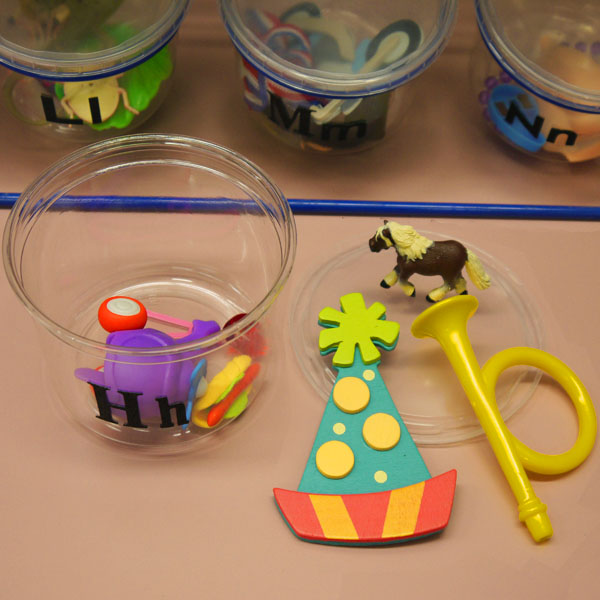
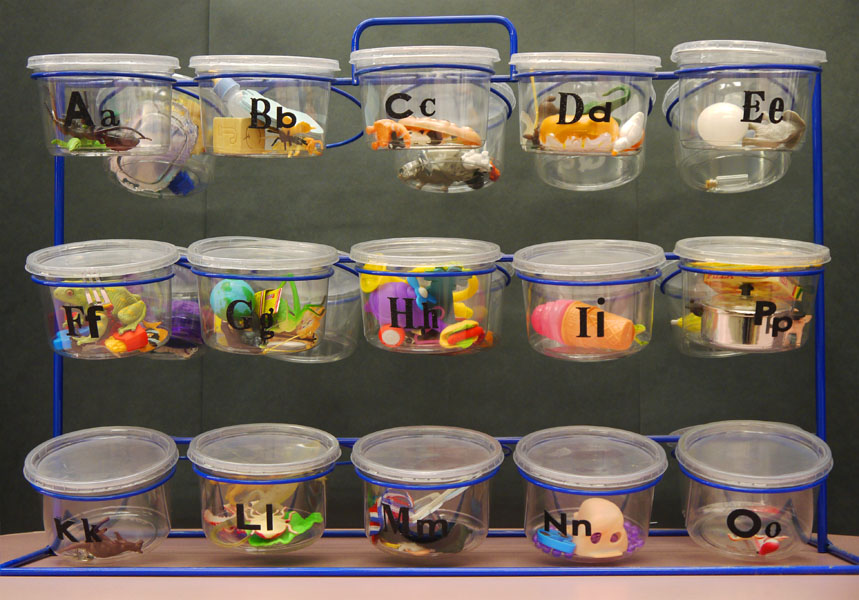
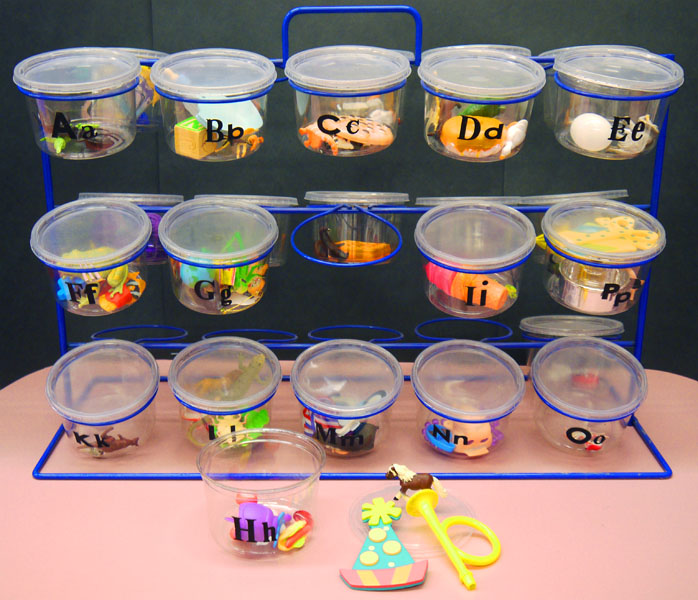
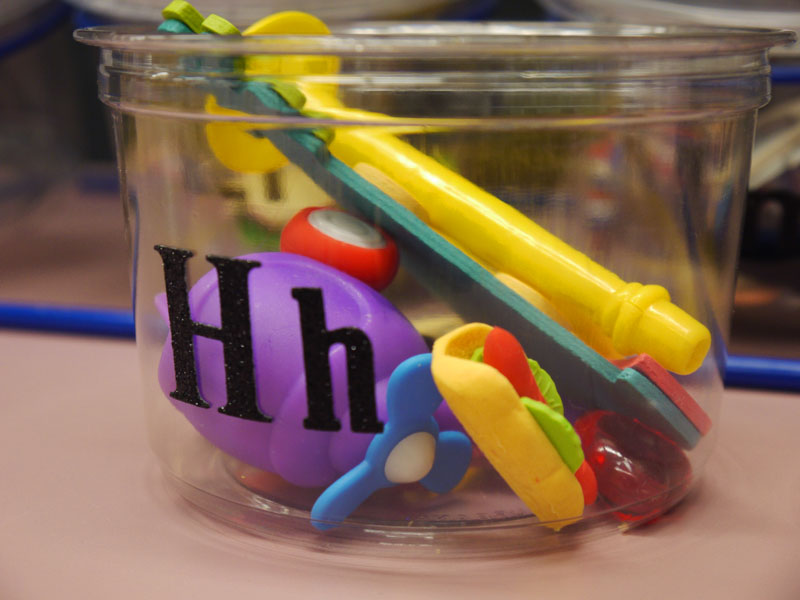
These are our sound bins. Within each bin are objects that correspond to the sound that the letter makes. For example, this is the /h/ bin, and inside are assorted objects that make a /h/ sound, such as hat, horn, and helicopter.

We utilize these bins for various of purposes. One of the things we do with them is when we have a sound of the week I will actually take out the objects from a bin, one by one, and then students will infer what that sound is going to be for that week.

Another thing that we do is we sort objects by the sound that they make, so we sort of integrate math. While reading we utilize the sound bins as a resource, so when a student is uncertain about the beginning sound that a word makes, they might be referred to the sound tubs so that they can find a corresponding tub that makes the initial beginning sound that the word that they're trying to find to figure out.

I also utilize the sound bins as a grouping strategy. Students are given different objects from different sound bins and then they have to go around the classroom making their sound. For example you might have some students going around the room going /b/ /b/ /b/ /b/ /b/ and they're trying to find another student who's making a /b/ /b/ /b/ /b/ sound. It actually gets rather funny watching the students collaborate in this way and celebrate when they've actually found someone who's making the same sound as them. When students are uncertain of the beginning sound that their object makes then they go to the Lend a Helping Hand Chair where I will assist them and then they can go out and try to find their partners.

When putting together your sound bins its very important to pay attention to the vowels because they make more than one sound. You're going to want to use the short sound that the vowel makes to place into your bins, so that students aren't confused by the sounds. For example, this is the /ă/ bin and inside I have an alligator and an ant. But I wouldn't put an ape in because it has an /ā/ sound and not an /ă/ sound.
Activity Objective
The goal of Letter-Sound Bins: Sorting Objects to Build Phonemic Awareness (Virtual Tour) is to help students build their awareness of the individual sounds in spoken words by playing with the individual sounds through various activities.
Quick Tips
Additional Comments:
- Assorted objects can help engage students in letter sound activities.

- Modeling each activity promotes literacy independence and provides students with an opportunity to understand the activity expectations.
Other Recipes by this Teacher


 Dial-a-Story!: Using Classroom Telephones to Support Reading Aloud (Virtual Tour)
PreK - 2nd
Reading Buddy Props: Motivating Reading with a Partner to Practice Early Literacy Skills (Virtual Tour)
PreK - 1st
Not Just for Baking!: Organizing Groups and Classroom Activities using Cookie Sheets (Virtual Tour)
PreK - 1st
Writers' Wall: Displaying Children's Work to Motivate and Assess Writing (Virtual Tour)
PreK - 3rd
Alphabet Artwork: Prompting Letter-Sound Associations using Meaningful Materials (Virtual Tour)
PreK - K
